
Gravelrings
Gravel grid system
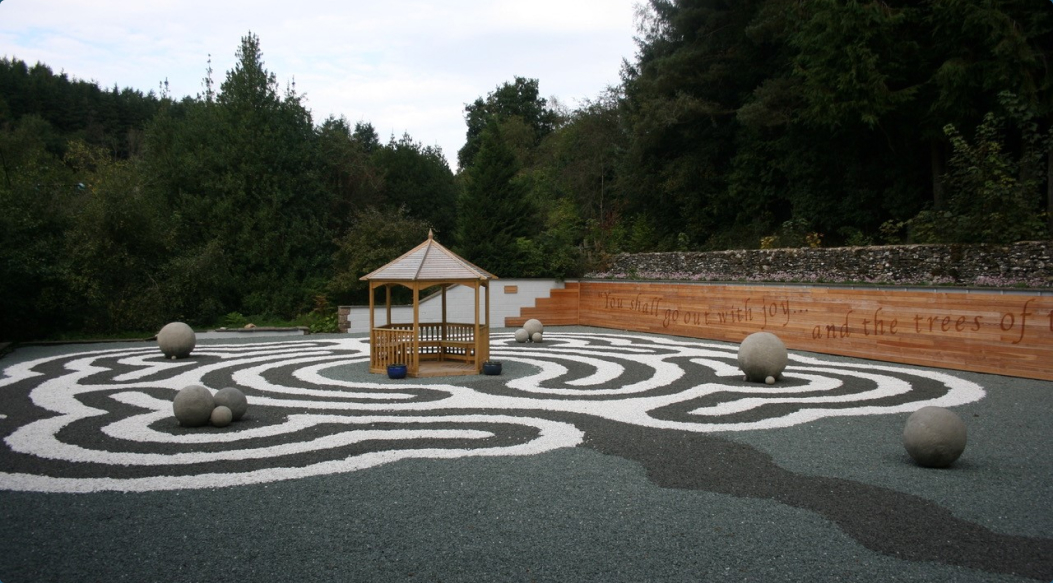
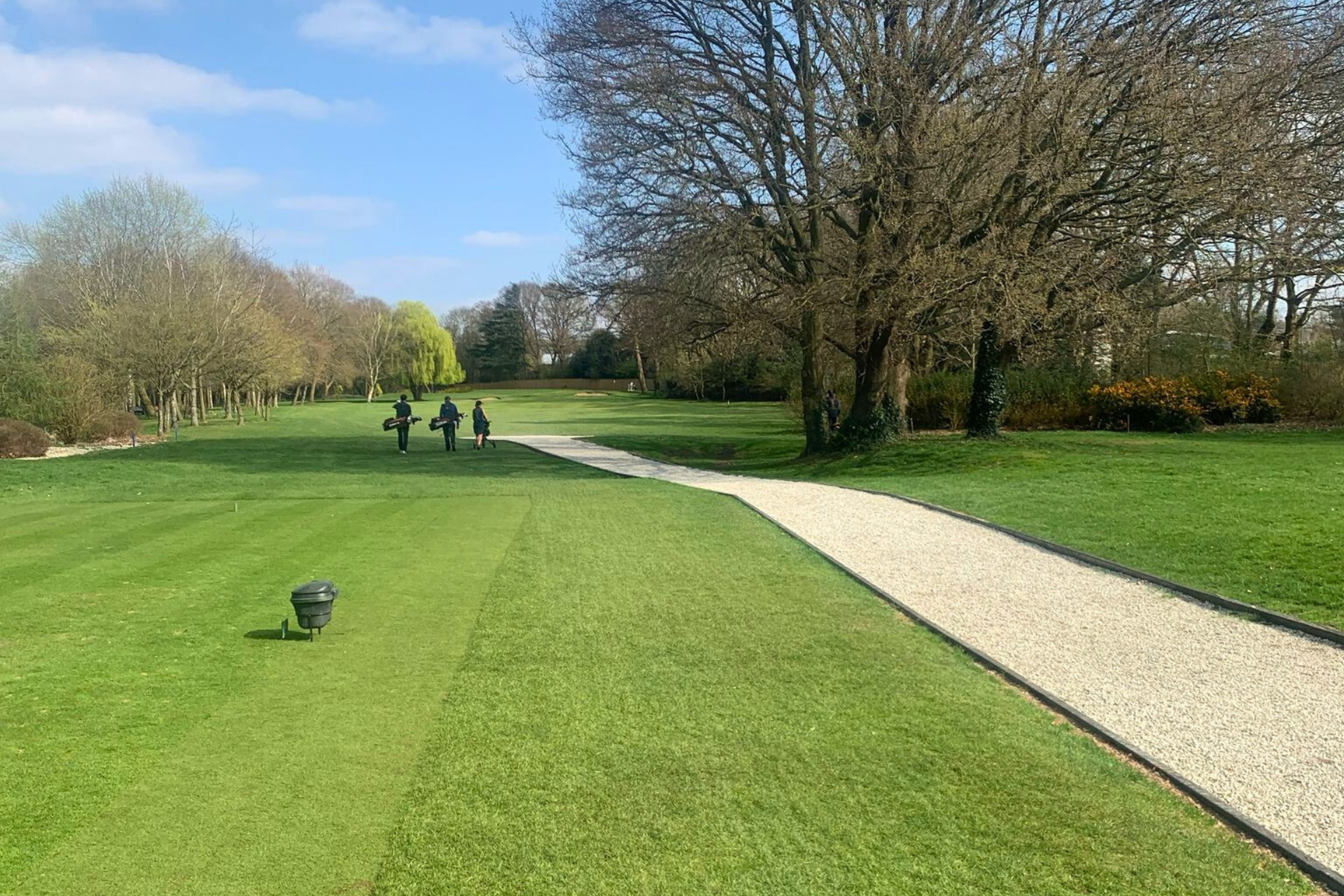
A gravel driveway creates a distinct, high-end first impression. However, achieving a perfect result depends on three crucial steps. Below, we explain how to install a gravel driveway using a simple three-step process. Most importantly, this includes installing a gravel driveway grid system to create a perfect gravel driveway that is both stable and free-draining.
Start by visualising how you want your gravel driveway to look. Is there space for a sweeping curve or a turning circle? Do you need to maximise parking?
Research ideas in advance by browsing online inspiration or looking around your neighbourhood. This will help you refine your layout and choose a design that suits both your home and your practical needs.
Good preparation is essential to achieving a long-lasting gravel driveway. Most installations require require excavation to remove topsoil and expose firm subsoil beneath. If you find any soft spots, fill them with a compacted sub-base to create a stable foundation.
Next, lay a suitable heavy-duty geotextile membrane, such as Drivetex, to stabilise the ground and prevent mixing between layers. Secure the membrane with fixing pegs to prevent movement during installation and with use.
Install a firm, level sub-base on top. This is typically MOT Type 1 aggregate, or MOT Type 3 for porous, SuDS-compliant driveways. The sub-base depth should suit the expected traffic, around 150mm for cars and deeper if it’ll be used for heavier vehicles. Finish with a thin layer of sharp sand or granite fines to smooth out any uneven areas.
This step is often overlooked, yet it plays a critical role in creating a durable gravel driveway. A grid system prevents stone migration, deep ruts, and uneven coverage over time.
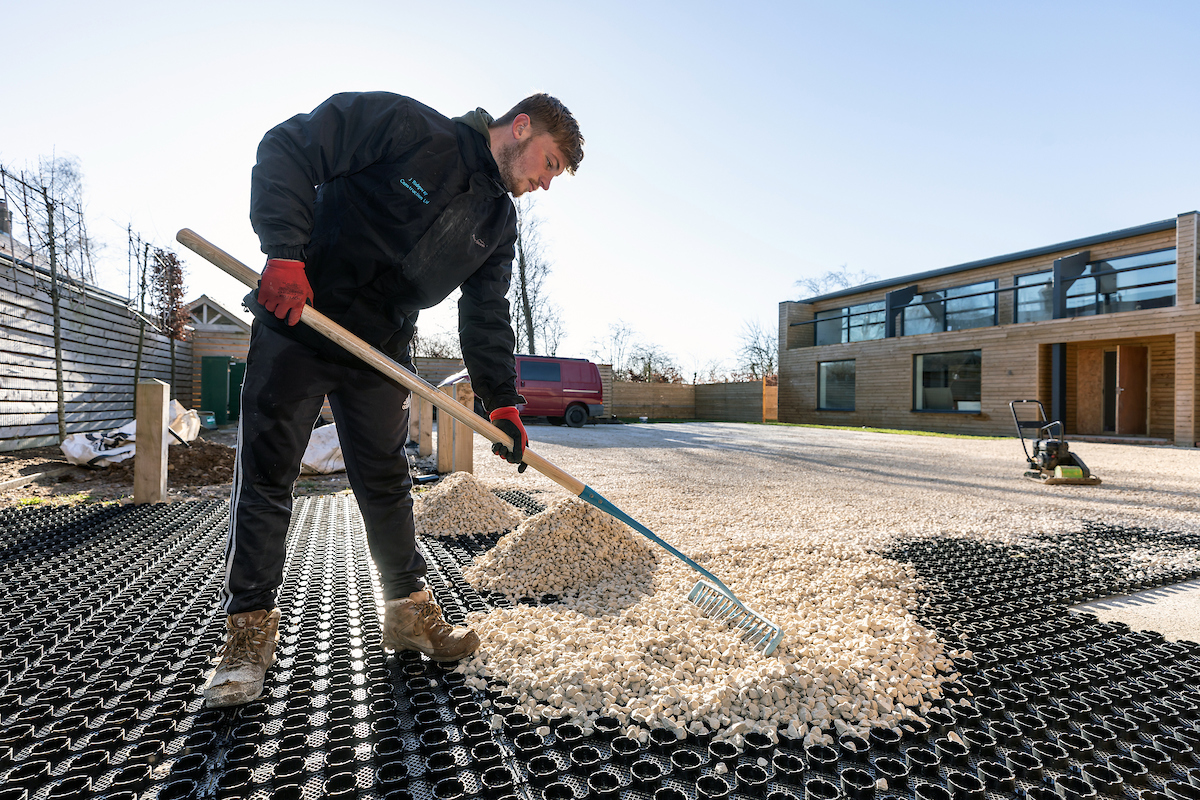
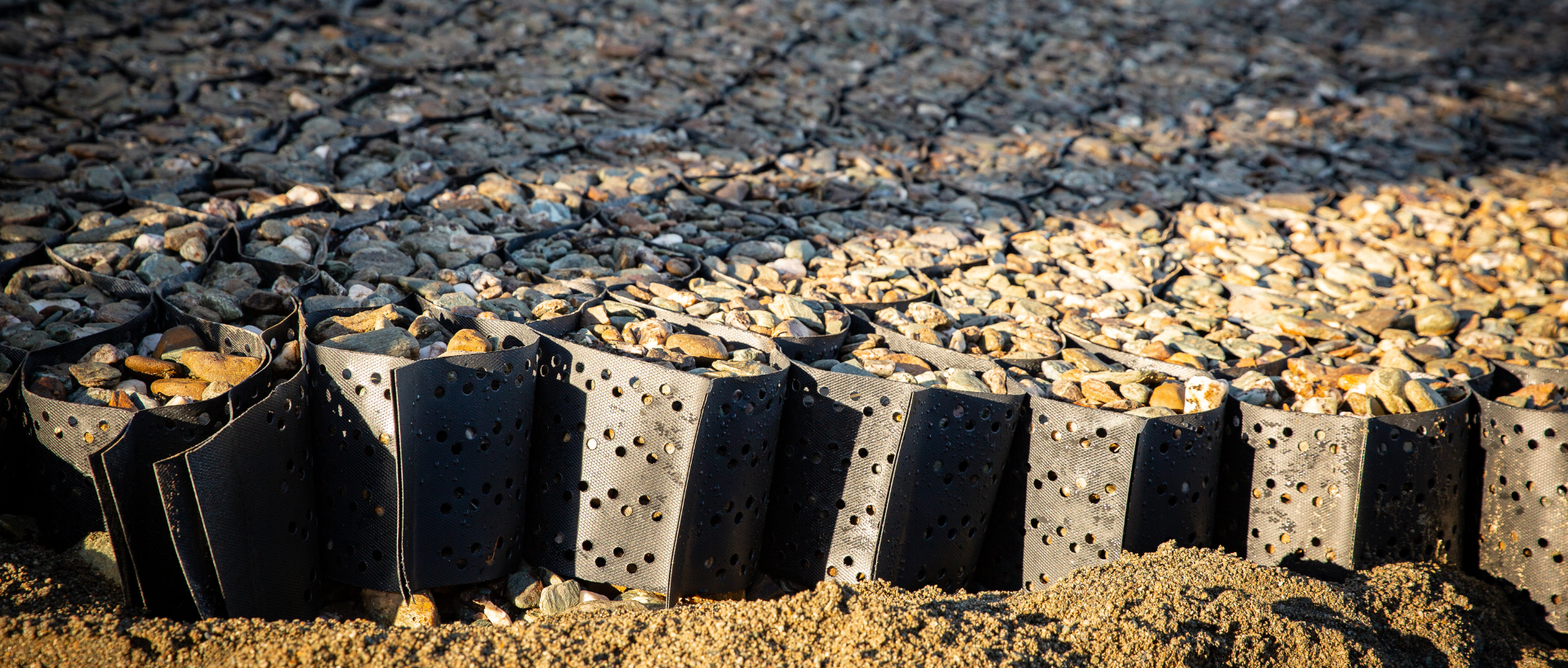
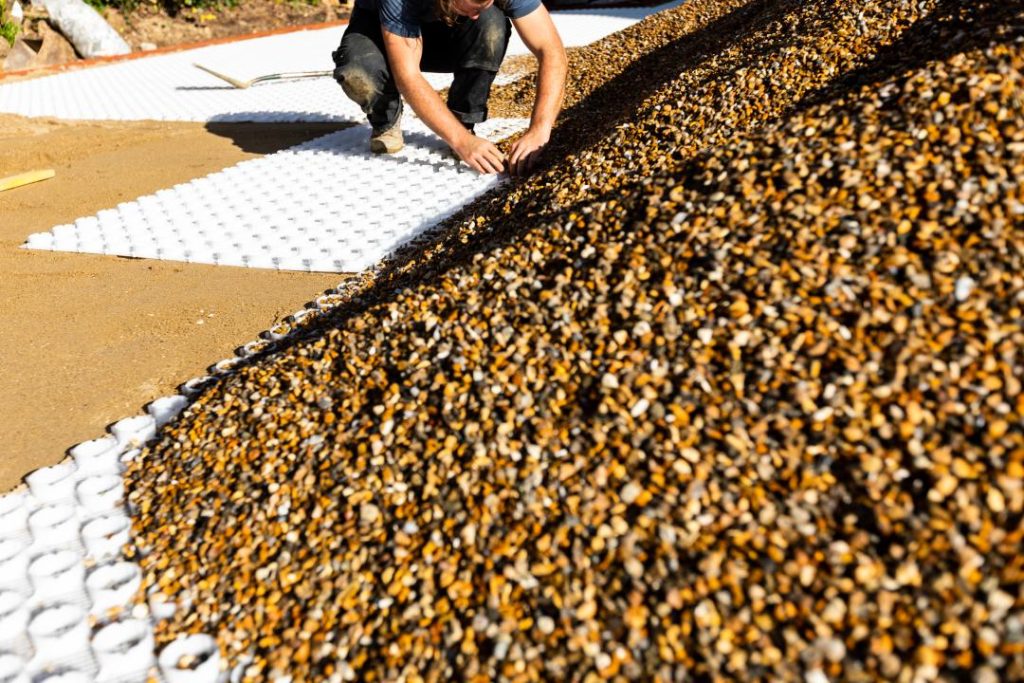
The Gravelrings gravel retention system from Beauxfort uses interlocking gravel grid tiles designed to sit directly on the prepared sub-base. Install the grids mesh-side down to stope gravel slipping underneath and lifting the system. Overfill the circular cells with gravel to fully conceal the grids once installed.
While hidden from view, the cell structure holds gravel firmly in place. This prevents movement across the driveway and stops stones spreading onto roads, flower beds, or lawns. Additionally, for best results and even coverage, angular gravel sized between 10–20mm should be used, as it locks together more effectively within the grid system.
Available in black or white, Gravelrings gravel grid mats blend seamlessly with your chosen gravel. The flexible design allows them to follow natural contours and be cut easily to fit the required shape. Additionally, for best results and even coverage, angular gravel sized between 10–20mm should be used, as it locks together more effectively within the grid system. Furthermore, Gravelrings panels cover one square metre and consist of four interlocking tiles, which allows installers to cover large areas quickly and efficiently. As a result, time spent on installation is reduced without compromising strength or finish.
By following these three steps when installing or upgrading a gravel driveway, you can achieve a surface that remains stable and low maintenance. With Gravelrings gravel driveway grids in place, your driveway will deliver reliable performance for years to come.
Achieve the perfect gravel driveway with the Beauxfort Gravelrings system. Visit www.beauxfort.com for design inspiration and information about Beauxfort landscape systems, or talk to our friendly team on 0330 055 2599 or info@beauxfort.com.