
Gravelrings
Gravel grid system
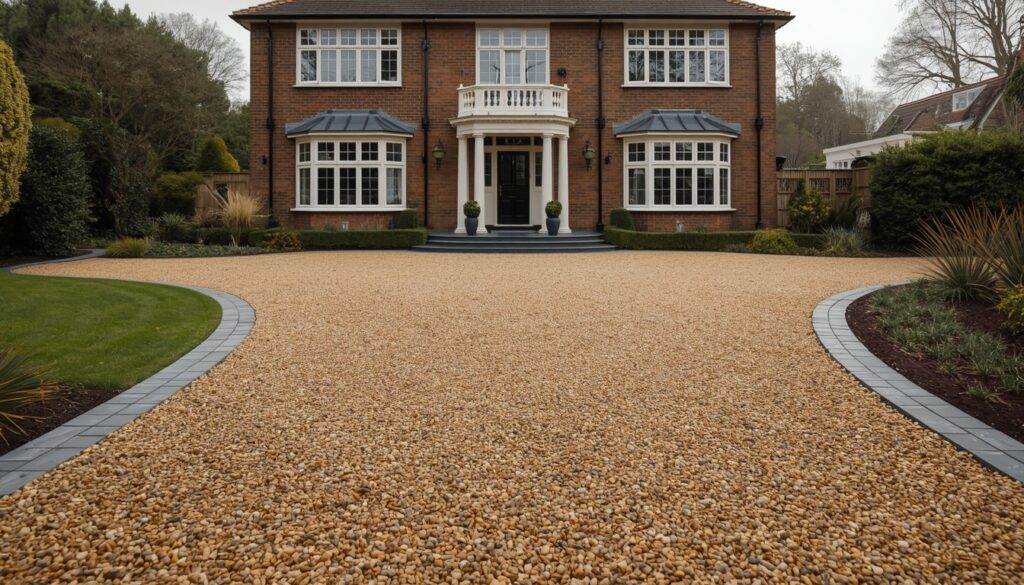
A driveway is more than somewhere to park. It’s often the first feature a visitor notices, shaping their sense of the property before they reach the front door. The materials, layout, and landscaping chosen all contribute to that impression, and getting the balance right means thinking beyond appearance alone. Getting these decisions right early can prevent costly rework later, from resurfacing to correcting drainage issues that weren’t considered at the outset.
Gravel remains one of the most popular choices for UK driveways, prized for its classic look. But a surface that shifts, ruts, or spreads unevenly can quickly undermine that impression. A consistently attractive entrance means considering design and performance together from the outset, often through a gravel grid system.
The driveway works alongside the front garden, boundary treatments, and entrance features to create a cohesive first impression. Material colour and texture matter: a warm, buff-toned gravel might suit a period cottage, while a cooler aggregate could complement a contemporary render finish. Curves can soften a frontage, while straight lines often suit formal properties.
Practical access matters just as much as looks. A driveway that fails to accommodate multiple vehicles or deliveries rarely feels successful long-term, so layout should be planned alongside material choice from day one.
Gravel has long been a favourite thanks to its natural texture. Selecting the right aggregate size and shape influences both appearance and stability; angular, quarried stone tends to interlock more effectively than smooth, rounded gravel, reducing shifting over time. Homeowners often overlook how drainage and maintenance needs should influence material selection just as much as colour, particularly on driveways with a slope or heavy vehicle use.
A permeable driveway allows water to drain naturally through the surface rather than relying on runoff, supporting better site drainage. Without proper reinforcement, loose gravel can move under traffic and rain, which is where a gravel driveway grid becomes a genuinely important design consideration.
Ruts and uneven patches often develop near entrances and turning points. Loose stones can spread onto lawns or paths, creating an untidy edge and extra maintenance. Left unaddressed, this typically means regularly sweeping and replenishing aggregate just to maintain a reasonable appearance.
The feel of a gravel surface is also an important part of the first impression. A stabilised gravel drive provides a smoother, more comfortable surface underfoot and when driving, whereas an unstabilised surface can rut and become uneven, affecting both the look and feel of the finished drive.
A driveway grid system helps here. Providing structure beneath the surface, a plastic grid for gravel keeps aggregate in place, supporting a more consistent finish. No grid system entirely eliminates maintenance, but it substantially reduces it.
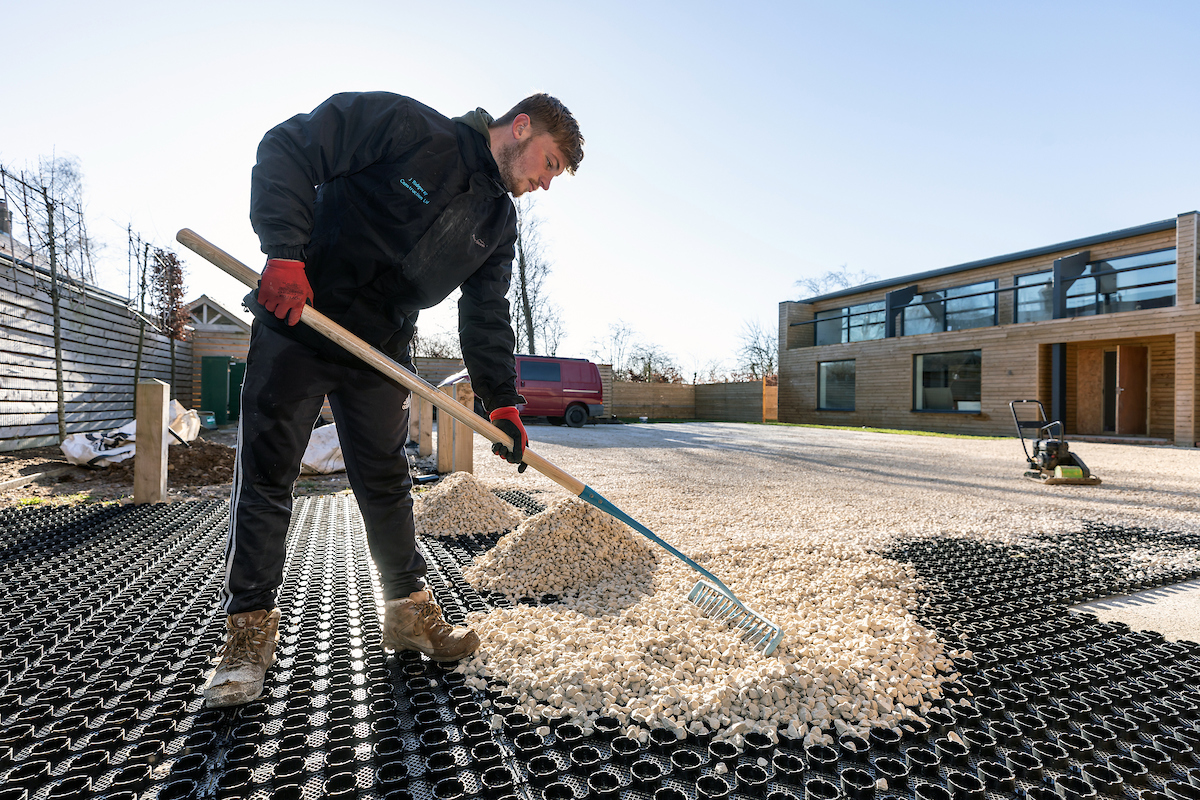
Installation is generally straightforward for both professional contractors and confident DIY homeowners. Panels connect easily across the sub-base, and the flexible design allows the grid to follow gentle curves or irregular boundaries without cutting or wastage. This adaptability makes it suitable for driveways of varying shapes, from narrow courtyard entrances to wide, sweeping approaches.
Beauxfort’s Gravelrings is a gravel retention grid designed specifically for stability challenges. The interlocking panels feature a circular cell design and an integral mesh base, working together as a gravel mesh to retain aggregate and reduce movement.
Gravelrings is supplied in 1m² sections, with each square metre made up of four 500mm by 500mm tiles. Each tile has a 25mm depth and is designed for angular quarried aggregate between 10mm and 20mm. Once installed, panels are overfilled with gravel so the structure stays concealed beneath the finished surface. For projects using ground fabric alongside the grid, pairing it with a suitable weed membrane underneath helps limit weed growth without compromising drainage.
As a gravel stabiliser, Gravelrings is fully permeable, supporting SUDS compliant drainage strategies where appropriate for the site. It suits driveway, pathway, and landscaping applications, though suitability depends on ground conditions, gradient, and other site-specific factors.
For areas where grass rather than gravel is preferred, Grassrings offers a comparable grass reinforcement grid, a grass grid that protects roots while allowing vehicle access. And for tree-lined driveways, a ground reinforcement grid like Groundcell protects root zones from compaction damage.
Appearance should never be the only consideration. A suitable sub base for the driveway, tailored to ground conditions and drainage, forms the foundation of a durable surface. There’s no single correct sub base depth that suits every project. The right depth depends on soil type, expected traffic, and drainage requirements, so site conditions should always be assessed before work begins. Poor preparation is one of the most common reasons a driveway fails prematurely, regardless of how good the surface material or grid system above it might be. Beauxfort’s project calculator can help estimate material quantities once dimensions and depth are known.
Beyond the gravel itself, smaller details shape how finished a driveway appears:
Whether you’re after a simple border for gravel beds or full stone driveway edging along a run of parking, the edging choice should match the overall material palette rather than being an afterthought.
Even a well-installed gravel driveway benefits from occasional attention. Topping up aggregate in high-traffic areas, clearing debris from edging, and checking that drainage channels remain unblocked all help preserve the finished look. A stabilised surface needs far less intervention than loose gravel alone, but a short seasonal check keeps the driveway performing as intended and helps catch small issues before they become larger, costlier repairs.
A successful driveway balances visual consistency, appropriate materials, surface stability, drainage, access, and long-term upkeep. A gravel retention system supports a more consistent finish, but proper ground preparation and careful installation remain just as important to the result.
Beauxfort provides landscaping systems for gravel driveways and other outdoor applications, including the Gravelrings gravel grid system. To explore the range or find the right solution for your own project, visit Beauxfort.