
Gravelrings
Gravel grid system
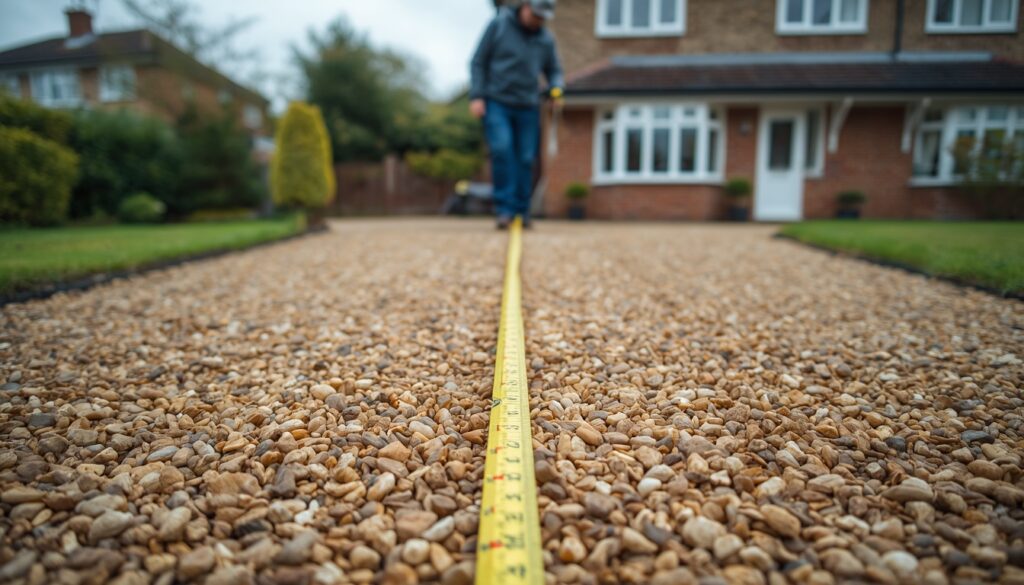
Ordering gravel for a driveway sounds straightforward until you end up with a mountain of surplus material on your front lawn, or worse, run short halfway through the job. Both outcomes cost money and can cause unnecessary delays.
A gravel driveway calculator gives you a useful starting point for estimating how much material you need. However, an accurate calculation depends on more than entering the length and width of your driveway. The depth of the gravel, shape of the area, sub-base, gravel type and installation system can all affect the final quantity.
This guide explains how to measure your driveway, use a gravel coverage calculator effectively and account for the factors that can affect your final order.
Ordering too much gravel creates unnecessary expense and leaves you with material to store or dispose of. Depending on the supplier, surplus material may not be returnable, while additional deliveries can add further costs.
Ordering too little creates a different problem. Running short partway through installation can delay the project, involve another delivery charge and make it harder to achieve a consistent finished surface.
Getting your calculation right from the beginning helps you:
A calculator cannot account for every site-specific condition, but accurate measurements and the right inputs can make the estimate considerably more useful.
Most gravel calculators require a few basic measurements:
For a simple rectangular driveway, the area calculation is straightforward.
For example, a driveway measuring 10 metres long and 4 metres wide has an area of:
10m × 4m = 40m²
You can then enter that area alongside your chosen gravel depth into the calculator.
If the driveway includes a turning area, parking bay or sections with different widths, calculate each area separately and add the results together. This is generally more reliable than trying to treat an irregular driveway as one large rectangle.
The accuracy of the calculator depends on the accuracy of the measurements you enter. Take time to measure the driveway carefully before ordering materials.
A straightforward approach is to:
If the driveway slopes significantly or has an unusual shape, additional care may be needed. A site assessment from an experienced installer can also help identify issues that a simple area calculation will not show.
Gravel depth has a direct effect on the amount of material required. Increasing the depth across the same area increases the total volume considerably, so entering an unsuitable depth can lead to a significant over- or under-order.
There is no universal gravel depth that works for every driveway. The appropriate depth depends on factors such as:
For many domestic applications, a gravel surface layer of around 40–50mm may be suitable when used with an appropriate stabilisation system, while loose gravel applications may require a different specification. These figures are starting points rather than universal requirements, so always follow the recommendations for the specific product and installation method.
If you are unsure about the appropriate depth, speak to a qualified installer or supplier before finalising your order.
The sub-base is the prepared layer beneath the gravel surface. It provides structural support, distributes loads and contributes to the overall stability and drainage of the driveway.
It is important to calculate the sub-base separately from the decorative gravel layer. The driveway sub base has its own depth and material requirements, which depend on ground conditions, intended use and the construction specification.
For a typical domestic driveway, a compacted sub-base of around 100–150mm may be used as a starting point, but this can vary significantly depending on the ground and project requirements. Poor or soft ground may require additional preparation.
Confusing the sub-base depth with the finished gravel depth is an easy way to underestimate the amount of work and material required.
Good ground preparation is fundamental to a stable driveway, so it should be considered alongside the surface material rather than as an afterthought.
The installation method can also change how much gravel you need.
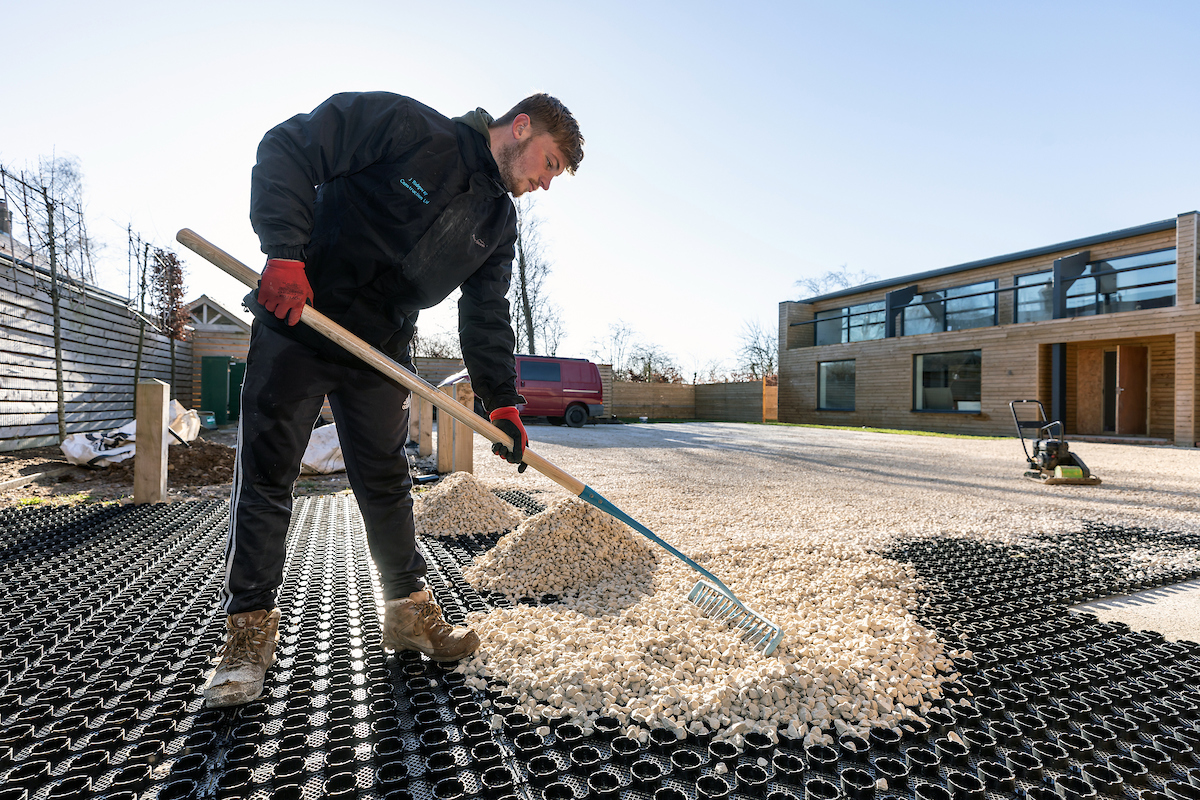
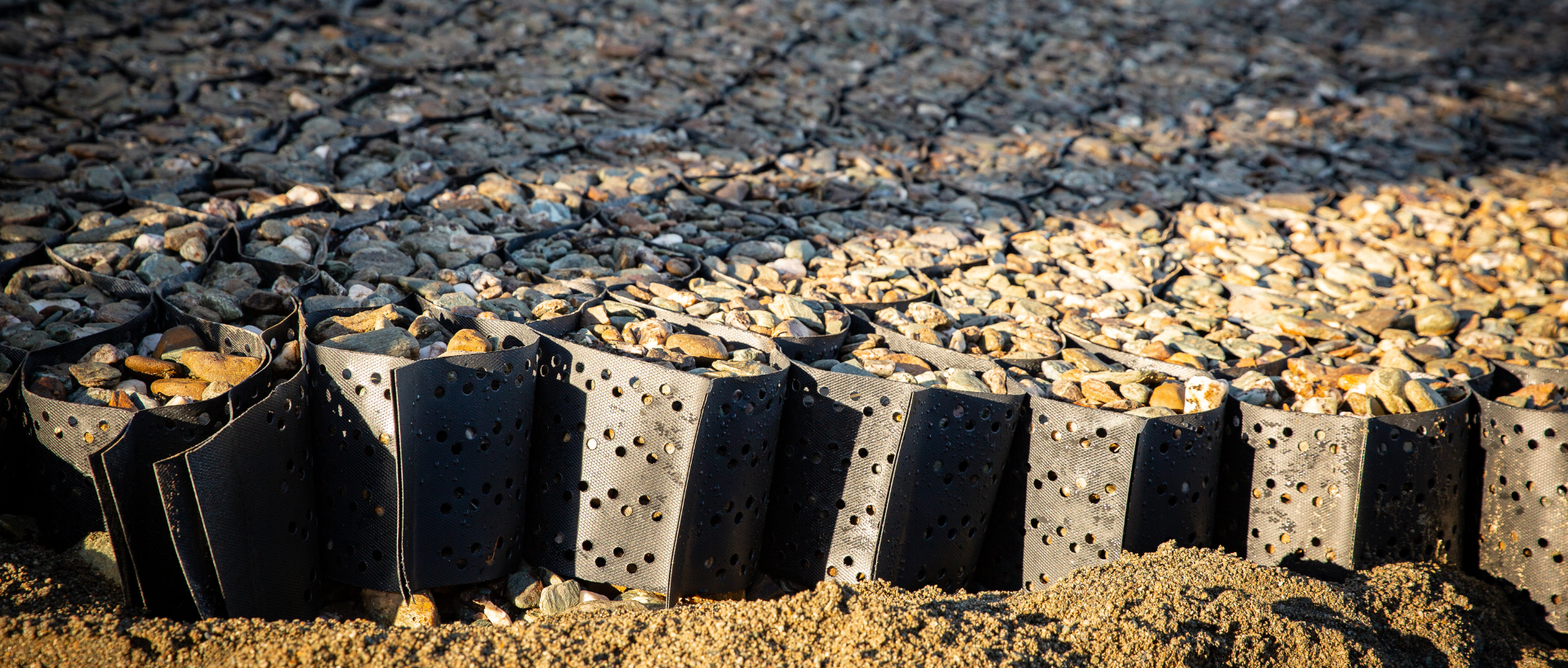
Loose gravel requires sufficient depth to create a stable surface, while a gravel grid provides cells that contain and stabilise the stone. This can reduce gravel migration and, depending on the system, may reduce the amount of gravel needed to achieve the desired finished surface.
Beauxfort’s Gravelrings® is a hidden gravel grid system designed to stabilise gravel while remaining completely concealed beneath the finished surface. Its circular, closed-cell mesh base locks gravel in place and supports loads of up to 350 tonnes per square metre.
Beauxfort states that Gravelrings® uses approximately 30% less gravel than conventional loose-gravel applications. If you are planning to use a stabilisation system, therefore, do not automatically apply a loose-gravel calculation to the project. Use the coverage guidance for the specific system you have selected.
This distinction can make a meaningful difference to both the quantity of gravel ordered and the overall project cost.
Before confirming your gravel order, check each of the following:
It is also worth confirming whether your supplier sells gravel by weight or volume. If the calculator provides a volume while the supplier quotes a weight, make sure the conversion is based on the specific gravel being supplied.
An online calculator is useful for estimating material quantities, but it cannot replace proper project planning.
Factors such as ground conditions, drainage, driveway gradients, edging, gravel size, sub-base preparation and stabilisation systems can all influence the final specification.
For a straightforward domestic project, a calculator combined with supplier guidance may provide a useful estimate. Larger driveways, commercial areas, steep sites and projects with difficult ground conditions may require a more detailed assessment.
If you are unsure about the specification, it is worth consulting a qualified installer or specialist supplier before ordering materials.
A few careful measurements can make a significant difference to the accuracy of your gravel order. By calculating each section separately, choosing an appropriate depth and accounting for the sub-base and installation system, you can reduce waste and avoid the disruption of running short.
Beauxfort provides a Project Calculator to help estimate material requirements for gravel driveway projects. Its Gravelrings® system is designed to create a stable, natural-looking gravel surface while reducing gravel movement and ongoing maintenance.
If you are planning a driveway project, you can also explore Beauxfort’s Approved Installers and Deliver to Site service for projects across the UK.