Gravelrings
Gravel grid system
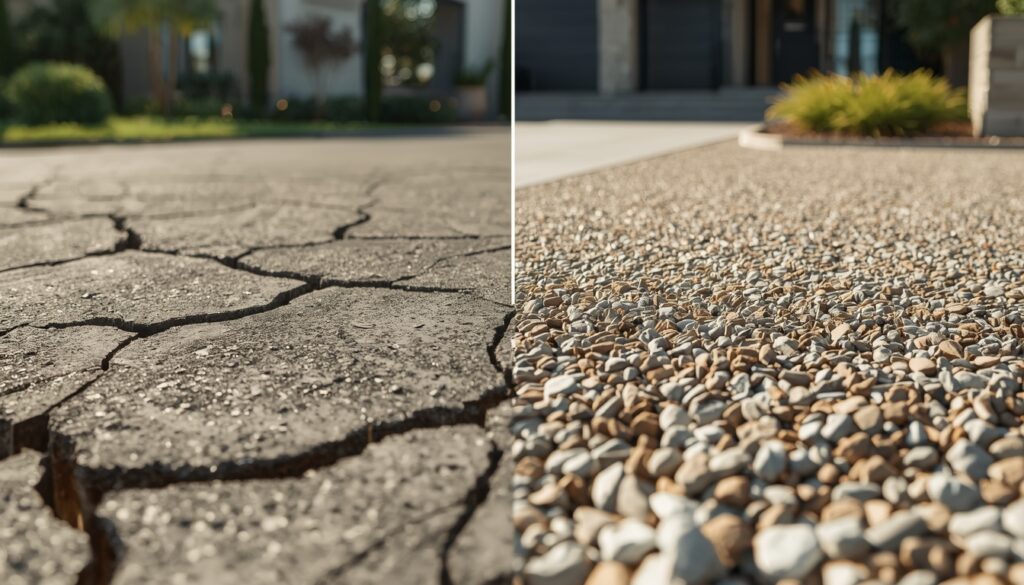
Ageing concrete and tarmac driveways often become cracked, uneven, and visually unappealing over time. Replacing these materials completely requires heavy machinery, costly excavation, and significant disruption. Homeowners and contractors often look for a more efficient alternative to breaking up an existing surface.
A structural overlay provides that solution. By installing a new gravel system over the existing base, you can upgrade the appearance and performance without full removal. This approach reduces labour, saves time, and limits waste while delivering a clean, natural finish.
Yes, provided the existing concrete or tarmac is structurally sound. A solid base can support the overlay and act as a stable foundation. This method works best where ground levels allow for a slight height increase and the new surface does not bridge the damp proof course.
A gravel overlay improves both appearance and practicality. Visually, it creates a natural, premium finish that suits both traditional and modern properties. From a practical standpoint, it avoids excavation costs, reduces installation time, and minimises disruption.
The gravel also produces a subtle crunch underfoot or tyres, which can act as a natural alert system for approaching movement. Overall, it is a cost-effective way to upgrade an existing driveway.
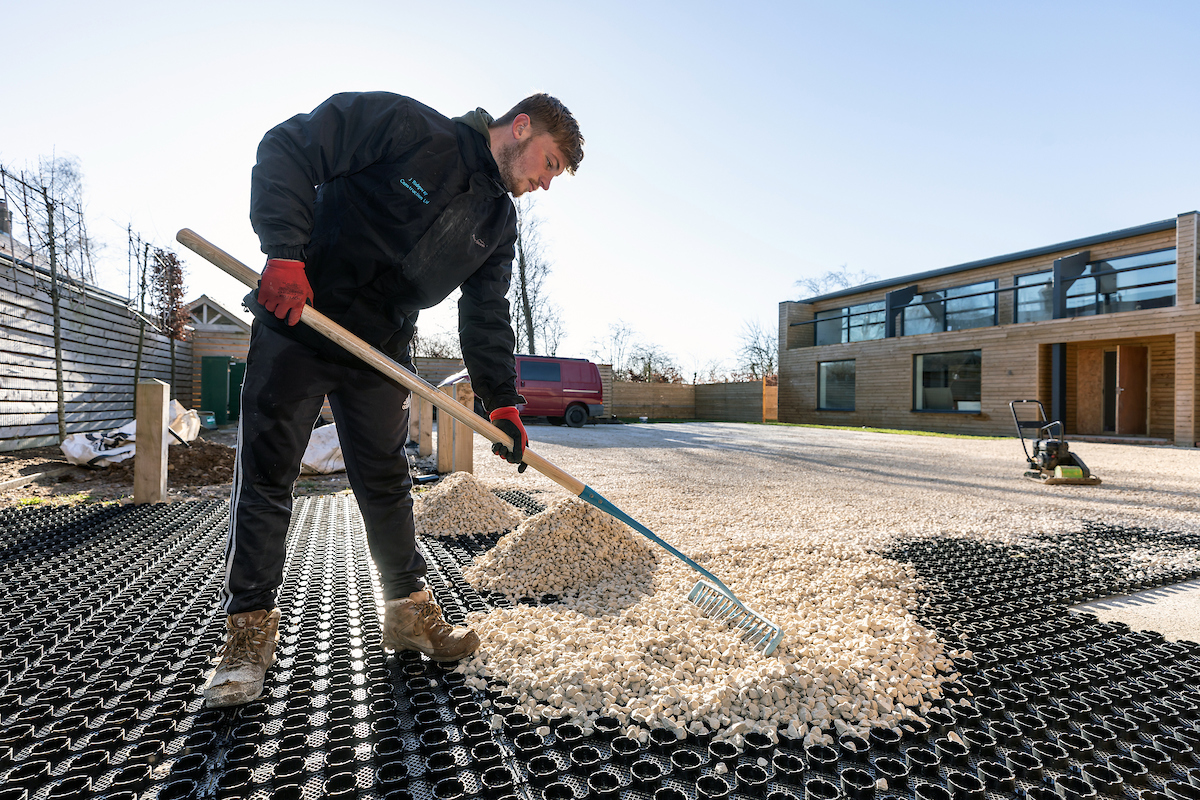
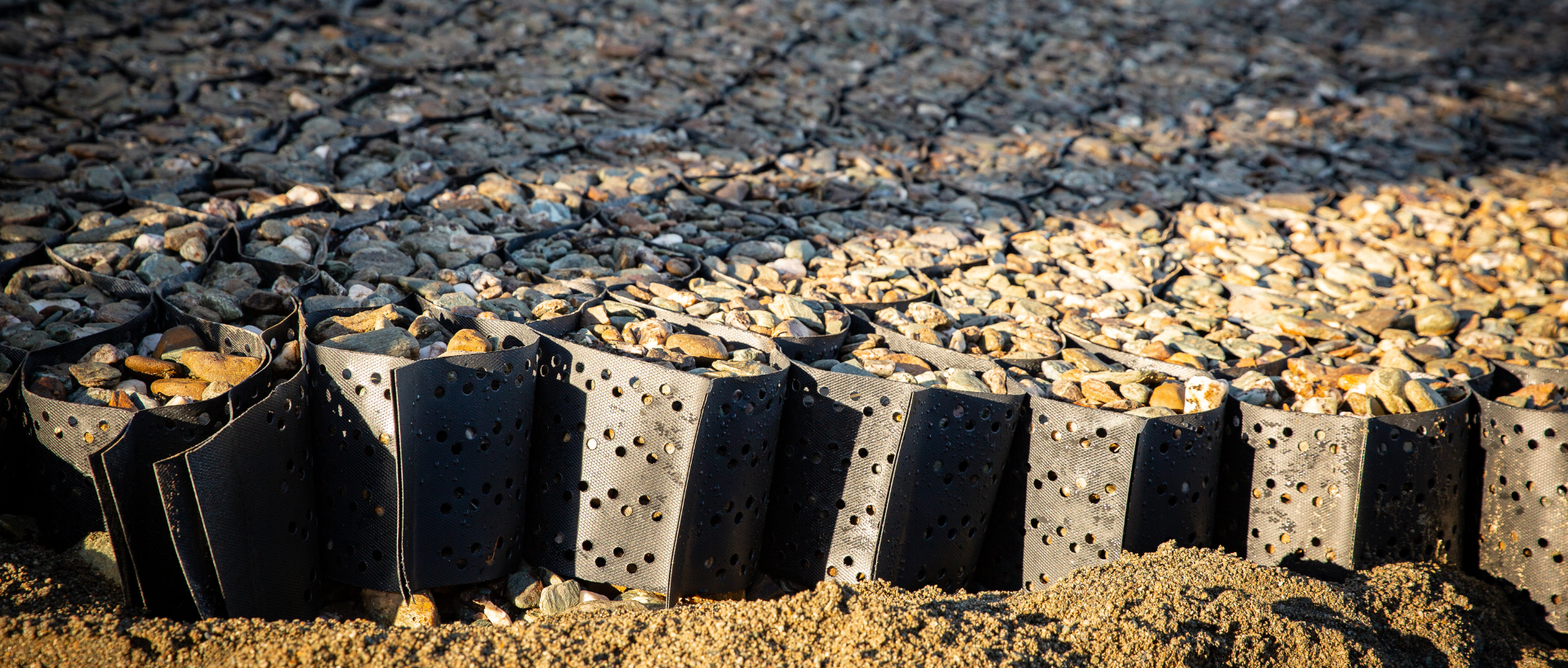
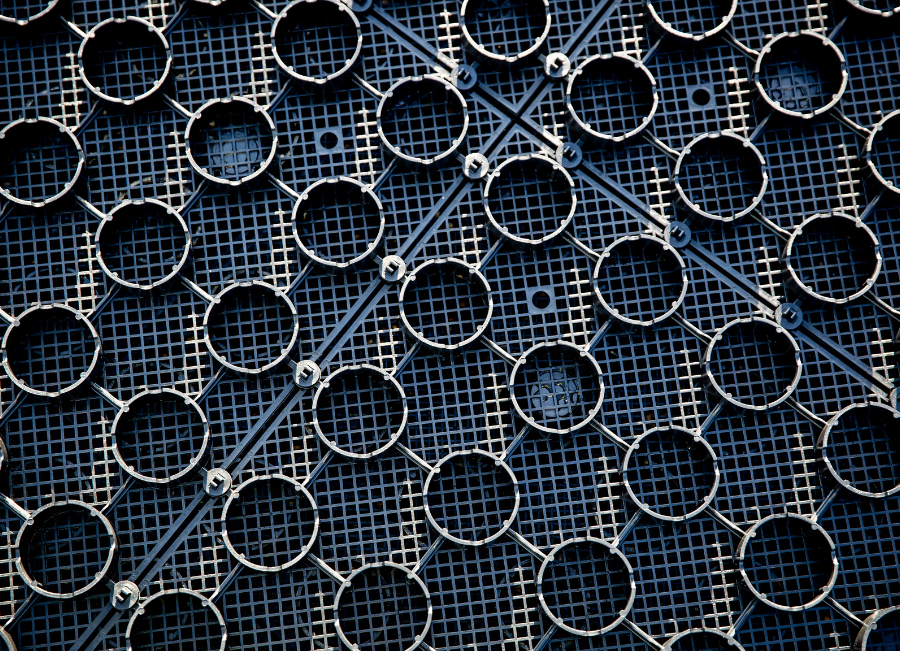
A gravel grid system is essential for maintaining stability. The interlocking panels hold the stone in place, preventing rutting, scattering, and uneven movement. They also distribute weight evenly, making the surface suitable for vehicles.
Once filled and overfilled correctly, the grid is not visible, leaving a neat and natural-looking surface that requires minimal maintenance.
For homeowners seeking a premium finish, attention to detail around the perimeter of the driveway is just as important as the surface itself. Effective edge restraint helps retain decorative aggregate, prevents material loss, and creates a clean transition between the driveway and surrounding landscape features. Many modern installations use aluminium profiles for gravel driveway edging applications, providing a discreet and durable border designed specifically to separate gravel from planting beds, lawns, and paved areas. This approach maintains neat edges without introducing bulky visual elements that can detract from the overall design.
Surface performance can also be enhanced by selecting a high-quality plastic grid for gravel, particularly when overlaying existing concrete or tarmac. These stabilisation systems help distribute vehicle loads evenly while preventing aggregate movement and rut formation. When combined with suitable edging and a well-prepared base, the result is a low-maintenance driveway that retains its appearance and structural integrity for years, making the overlay method an even more attractive alternative to complete driveway replacement.
Transforming your driveway requires a methodical approach to ensure lasting results. Proper preparation and careful execution guarantee a high-quality finish.
Managing surface water is an important consideration. With an existing tarmac or concrete base, drainage should already have been accounted for during the original installation.
In a gravel grid system, water passes through the gravel and grid layer and is then dispersed by the existing drainage setup. Water may temporarily sit between the grid and the base before dispersing, but this does not typically result in surface puddling.
Drilling additional drainage holes into the original surface is not required. Instead, performance depends on the effectiveness of the existing drainage system.
A successful overlay installation depends not only on the stability of the existing surface but also on how effectively water and aggregate movement are managed over time. Incorporating a carefully prepared permeable sub base around transition areas and borders can help improve drainage performance while reducing the risk of standing water beneath the gravel layer. This creates a more durable and stable finish, particularly for driveways exposed to regular vehicle use and changing weather conditions.
Border detailing is equally important for maintaining a clean appearance and preventing decorative stone from spreading into surrounding landscaping. In many premium overlay projects, contractors now use aluminium profiles for stone driveway edging applications because they provide a discreet yet durable separation between the gravel surface and adjacent borders. Rather than using edging manufactured from stone, these aluminium restraints are specifically designed to retain aggregate neatly while delivering a refined architectural finish that complements both contemporary and traditional properties.
In an overlay setup, the original surface acts as the sub-base. Because it is already compacted, it provides strong load-bearing support.
The grid depth determines how much gravel is required. The grids should be filled fully, then overfilled by 10mm to 15 mm so the surface looks clean and remains stable. Too much gravel can lead to movement, while too little may expose the grid.
Maintaining the correct depth ensures a durable and stable surface suitable for regular use.
Several mistakes can affect the final result:
Avoiding these issues helps ensure a consistent and long-lasting finish.
An overlay is not suitable if the existing surface is severely damaged or unstable. In such cases, full removal and reconstruction are required.
You should also avoid overlaying if the added height would bridge the damp proof course, as this can cause moisture issues.
Sloped surfaces can still be suitable, provided they are within acceptable limits. Gravelring is typically effective on gradients up to 1:5, as long as they are securely fixed to the base. If the slope is steeper than this, the surface may need to be reduced before installation.
Overlaying does not worsen drainage, but if the existing drainage system is already inadequate, it should be addressed before installation.
Transforming an old, tired exterior into a stunning new entrance is highly achievable with the right approach. An overlay method provides a fast, cost-effective and environmentally friendly solution. By retaining the original foundation, you eliminate costly demolition while gaining a robust base. The key to a truly premium finish lies in using a high-quality gravel stabilisation grid system. These structures guarantee stability, prevent rutting and ensure your decorative stones remain perfectly positioned. You can enjoy a low-maintenance, visually striking entrance that enhances your property value. For expert advice and premium landscaping products, explore the innovative solutions available at https://beauxfort.com/ to start your driveway transformation today.