
Gravelrings
Gravel grid system

Most homeowners spend their time choosing gravel colours, surface finishes, and edging styles. What lies beneath the surface rarely gets the same attention. Yet the sub-base is where a driveway either succeeds or fails. Get it right, and you build something that performs well for decades. Get it wrong, and problems surface quickly: rutting, pooling water, cracking, and constant maintenance.
At the heart of modern driveway engineering sits the permeable sub base. Understanding what it is, why it matters, and how it works within a complete driveway system will help any homeowner, designer, or contractor make better decisions from the start.
A permeable sub base is a load-bearing foundation layer constructed from open-graded aggregate, typically crushed stone or recycled concrete. Unlike traditional dense-graded sub-bases, which are packed tightly to restrict water movement, a permeable sub base uses angular, uniformly sized aggregate with void spaces between particles. Water passes through these voids rather than sitting on the surface or being redirected elsewhere.
This distinction is significant. Traditional sub-bases prioritise compressive strength but direct water away from the driveway. A permeable sub base achieves both structural support and controlled drainage simultaneously, making it the preferred foundation for modern driveway systems.
The surface of a driveway is the layer people see, but the driveway sub base is the layer that holds everything together. Without a correctly designed foundation, even the highest-quality surface material will deteriorate prematurely.
A well-constructed sub base delivers several critical functions:
Every layer above the sub base depends on it for support. Investing in the foundation is one of the most effective ways to extend the life of a driveway.
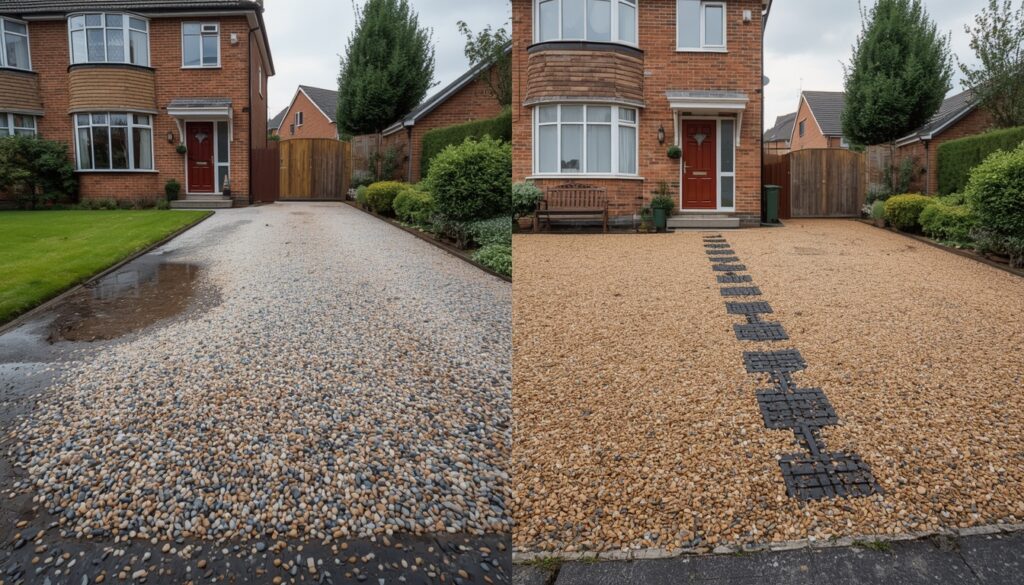
One of the most pressing challenges for modern construction is managing surface water responsibly. Traditional impermeable driveways shed rainfall directly onto roads and into drainage systems, increasing the risk of localised flooding, especially during heavy rain.
A permeable driveway addresses this by allowing water to infiltrate through the surface and sub-base layers and return to the ground naturally. This process, known as natural infiltration, reduces surface water runoff, supports groundwater recharge, and eases pressure on existing drainage infrastructure.
This approach aligns directly with Sustainable Drainage Systems (SuDS) principles, which are now embedded in UK planning policy. SuDS-compliant construction methods aim to manage rainfall as close to its source as possible, mimicking the natural water cycle rather than working against it.
For homeowners in England, planning guidance generally requires that new or replacement driveways over a certain size use permeable materials or include managed drainage. A correctly specified permeable sub base is central to meeting those requirements. Consulting with a designer or contractor familiar with current local planning requirements is advisable before starting any driveway project.
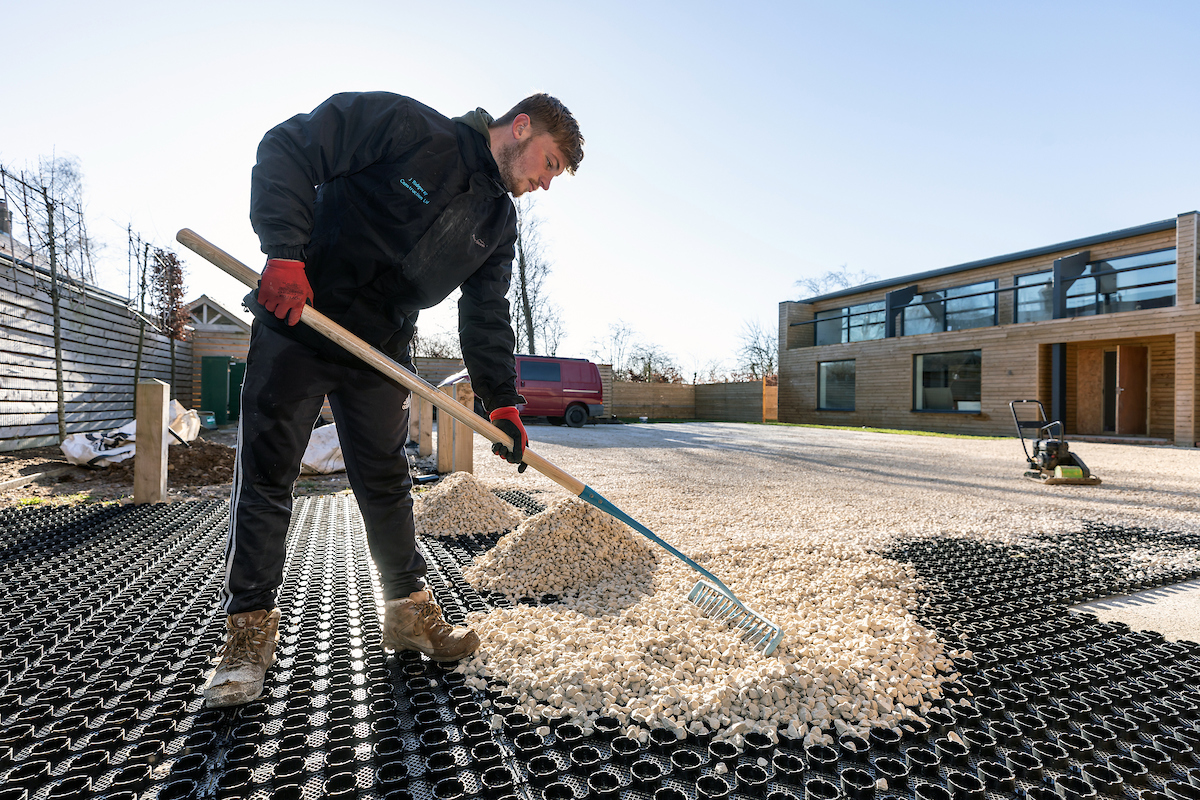
A well-engineered driveway is a layered system, with each component contributing to the overall performance. Here is how a modern permeable driveway is typically constructed from the ground up:
Each layer is designed to work with the others. Removing or shortcutting any element compromises the whole system. You can estimate materials for your own project using our project calculator.
Even well-intentioned driveway projects can fall short when fundamental steps are overlooked. These are the most frequent errors:
Getting these details right from the start saves time, money, and frustration later.
Selecting a driveway system involves more than choosing a surface finish. Vehicle type, expected traffic levels, existing soil conditions, and drainage requirements all influence which materials and construction methods are appropriate.
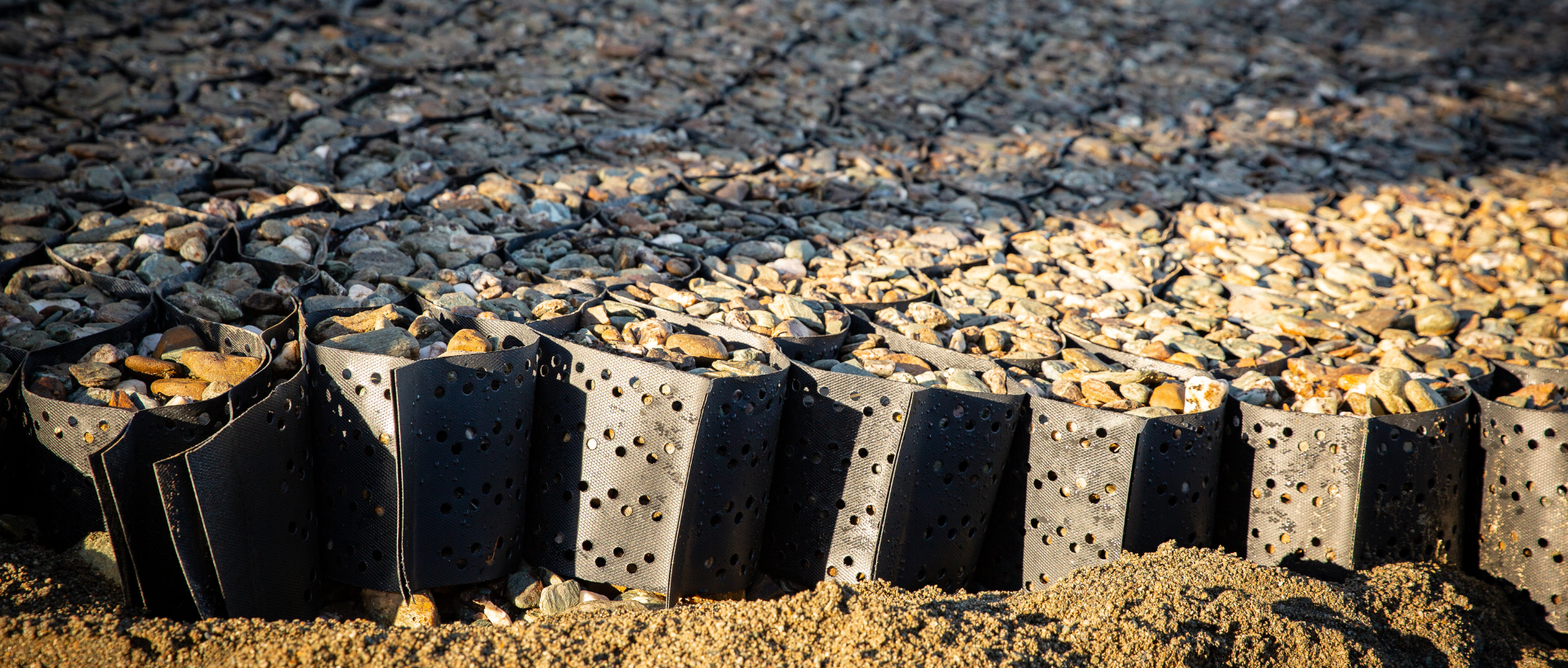
Engineered systems are designed so that each component works in combination. A gravel stabiliser sits above a correctly prepared sub base; the sub base sits above a properly installed geotextile; and everything depends on the quality of the ground preparation below. Treating each layer as part of a connected system, rather than a series of independent choices, produces far better results. This is also true for driveways with existing worn surfaces, where the Gravelrings Overlay system can resurface tarmac or concrete without a full rebuild.
Beauxfort’s GravelRings® are designed with this whole-system approach in mind, supporting permeable construction while delivering a stable, attractive gravel surface. See real examples in our project case studies.
The permeable sub base is not an afterthought. It is the foundation on which everything else depends. Correct construction, appropriate material selection, and the right depth all contribute to a driveway that drains effectively, carries loads without deforming, and requires far less maintenance over time.
Permeability adds environmental value too. A driveway that manages water naturally protects local drainage systems and supports sustainable construction principles that are increasingly relevant to homeowners and professionals across the UK.
Planning a new driveway or upgrading an existing one? Explore Beauxfort’s engineered gravel stabilisation systems, installation resources, and project planning tools at beauxfort.com to build a driveway designed for lasting performance, or get in touch to start your project.