
Gravelrings
Gravel grid system
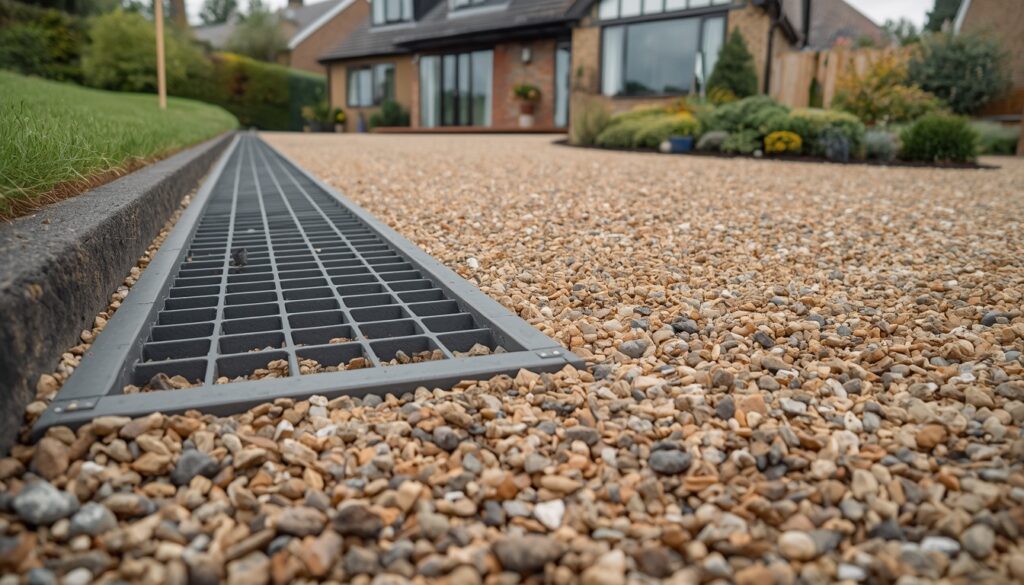
Designing an attractive gravel driveway becomes far more complex once a slope or change in ground level enters the picture. Loose gravel suits many British homes, but keeping it level and tidy is harder when gravity, rainfall, and traffic all work against it. On flat ground, gravel tends to settle and stay put. On sloping land, the same stone can shift and rut within weeks, which is why building a driveway on a slope calls for its own approach.
Getting the result right means thinking beyond the aggregate itself. Ground preparation, drainage, and stability all need to work together. This article looks at why level changes cause gravel to move, what to consider on uneven terrain, and how a well-chosen gravel stabiliser can support a more consistent finish.
Sloping driveways demand more careful planning than flat ones, because several forces act on loose stone at once. Gravity pulls gravel downhill over time. Vehicle tyres compress and drag stone as cars turn or brake on an incline, often creating ruts in the same spots. Heavy rainfall washes smaller stones towards the lowest point. Where the surface beneath hasn’t been properly prepared, these effects compound, leading to an uneven finish that needs constant raking and topping up.
The extent of this movement depends on the steepness of the slope, the aggregate used, the quality of preparation, drainage, and traffic levels. Not every gradient causes serious problems, but any driveway with a noticeable change in level deserves extra thought at the design stage.
A driveway is only as good as what lies beneath it, and this matters even more where ground levels change. Before any gravel goes down, it’s worth assessing the existing ground conditions. Soft, unstable, or poorly draining soil often needs to be removed and replaced with a more suitable base.
Key considerations include:
There’s no single sub base depth for driveways that suits every project; depth and composition should reflect the soil type, expected traffic, drainage conditions, and gradient of the plot. A gravel driveway calculator can help estimate material quantities once these factors are settled, reducing the risk of over- or under-ordering.
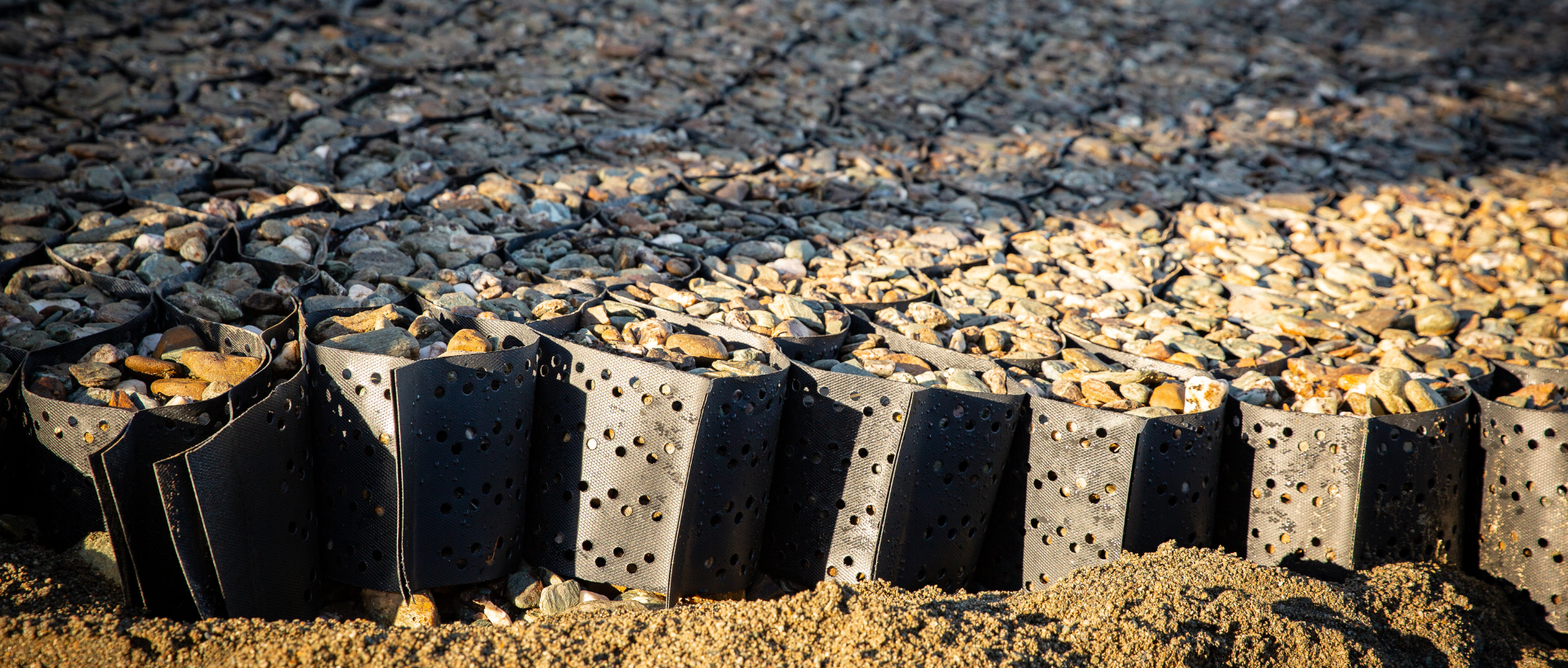
A gravel grid system addresses the core problem of loose stone shifting under load. By containing gravel within individual cells, a grid can reduce lateral movement and help create a more consistent, level surface. Some systems pair the grid with a gravel grid with membrane beneath, while others rely on a separate heavy duty membrane for gravel laid ahead of installation.
Benefits of a well-installed system include better retention of aggregate within defined cells, reduced migration towards the lowest point, a more even finished appearance, and easier ongoing maintenance. Effectiveness still depends on correct installation, proper site preparation, and choosing a product suited to the application; no stabiliser can fully eliminate erosion, drainage issues, or poor groundwork if those aren’t addressed first.
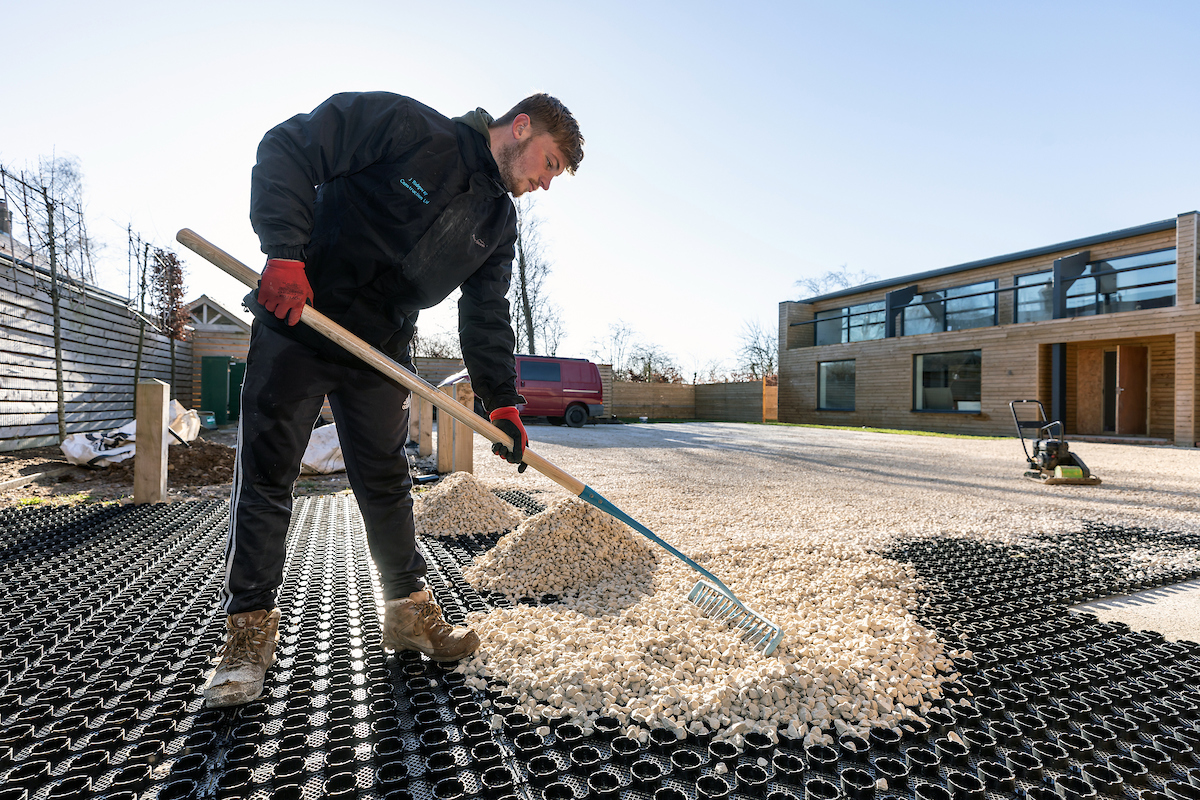
For those exploring gravel driveway grids as part of their project, Beauxfort’s Gravelrings system offers an interlocking panel design built around circular cells rather than the traditional rectangular or honeycomb layout. This distributes stress evenly around each cell, helping panels resist the localised stress points that cause other grids to lift or rut over time.
Gravelrings features an integral gravel mesh base that anchors the panels into the ground, while the circular cells retain gravel and limit its movement. A key feature unique to the Gravelrings design is its pre-positioned fixing holes, which allow the grid to be pinned directly into the sub-base. This helps prevent movement of both the grid and the gravel, which is particularly important on sloping driveways. Gravelrings is suitable for gradients up to 1:5, providing added reassurance where a driveway needs to accommodate a change in level.
The system is permeable by design, letting water pass through rather than pooling, which suits driveways, pathways, and other landscaped areas. As with any stabilisation product, suitability depends on the specific site, so slope, soil type, and traffic should be assessed first.
Water movement has an outsized effect on driveways built across changes in level. Rainwater flows downhill, and on a poorly planned surface it can carry loose aggregate with it during heavy downpours. This makes drainage planning just as important as gravel retention.
A permeable driveway allows water to infiltrate the surface rather than running off, but overall performance depends on the full construction, from a properly specified permeable sub base through to the surrounding ground. It’s also worth checking whether the project needs to be SUDS compliant, since not every permeable surface automatically satisfies sustainable drainage expectations, and getting this right from the outset avoids costly remedial work later.
Well-chosen gravel driveway edging helps define the boundary of the driveway and reduces stone spreading into lawns or footpaths, an especially useful detail on sloped sites where gravel is already inclined to migrate.
Aggregate matters too: angular gravel tends to interlock more effectively than rounded varieties, so check that the chosen stone suits the stabilisation system being installed. Finally, the slope, turning areas, and transitions between levels should be mapped out during planning rather than adjusted after installation.
Keeping a gravel driveway looking good over the years comes down to a few habits: inspecting areas where gravel tends to collect, checking drainage routes after heavy rain, and addressing uneven patches early. Edging should be kept in good repair, and manufacturer maintenance guidance followed closely. A properly designed gravel stabiliser can reduce ongoing displacement, but needs will still vary by site, climate, and usage.
A driveway built across a slope needs more than attractive stone. It requires proper ground preparation, thoughtful drainage planning, suitable retention, well-considered edging, and a layout that respects the property’s natural contours, with stabilisation systems earning their place where stone movement is a genuine concern.
Beauxfort offers a range of ground reinforcement and landscaping solutions for exactly these kinds of projects. Visit beauxfort.com to explore the Gravelrings system and find out more about gravel retention options suited to your property.